
Are you feeling the heat in your dorm room?
While an Air conditioning system might seem like it’s a must-have for keeping your small space livable during those hot months, you actually don’t need one to stay calm, cool, and collected!
With summer around the corner, lack of air conditioning can be a real struggle for college students trying to cool down and smash their study goals!
In my helpful blog post, I’ll show some of my best tips and hacks on how to keep your room nice and cool without spending too much money or energy!
So break open that window and crank up your fan—it's time to beat the heat with my easy-peasy DIY solutions!
This post is all about how to cool a dorm room without air conditioning.

Before we head into the bigger picture, let’s start first with the mini grab.
HOW TO COOL A DORM ROOM WITHOUT AIR CONDITIONING
To keep a dorm room cool without air con, use a wall, ceiling floor, or desk fan, use ice cubes and salt in a bowl, or place the bowl of ice cubes near a fan, Hangdamp sheets or towels on windows, cover windows with thick curtains or thermal shades will reduce the amount of heat and don’t forget to stay hydrated!
Ok so with the brief nailed, so you can understand a little more about how to cool a dorm room without air con, let’s find out first exactly what air con is!
What is air con and how does it work?
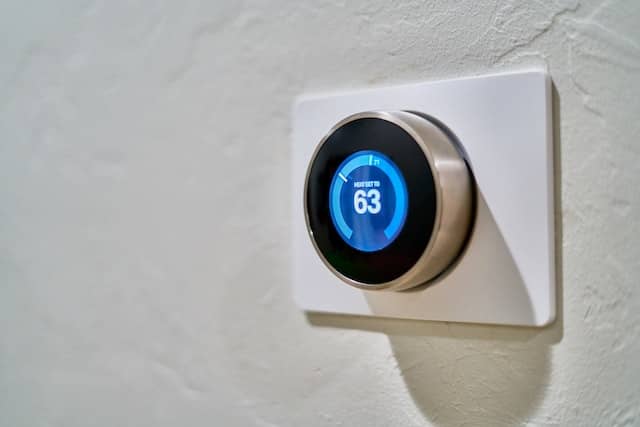
Photo by Dan LeFebvre on Unsplash
Although it may sound obvious, it’s worth knowing what an air con is and how it works so you can do your best to copy how it keeps a room cool without the price tag!
Although air conditioning is incredibly helpful when it comes to keeping spaces at a comfortable temperature, unfortunately, they are not usually a standard issue in a dorm room!
But how do they work?
Essentially they work in the same way as a refrigerator. So the air con draws in hot air from the room, removes its heat, and then circulates cool air back into the room.
It takes the warm air outside which cools down the inside temperature cooling down the interior of your house.
It does this with an evaporator coil, which is filled with fluid called a refrigerant that absorbs heat as it powers through during its cycle.
Once the refrigerant reaches the condenser outside, it transfers the heat away from inside rooms to the outdoors.
The cooled-down liquid then cycles back inside where it repeats the cooling process all over again, which provides a steady stream of cold air.
So how do you fake this super clever but expensive kit when you are sweltering and trying to study in your dorm room?
Read on to discover how!
How to cool down a dorm room without air con!
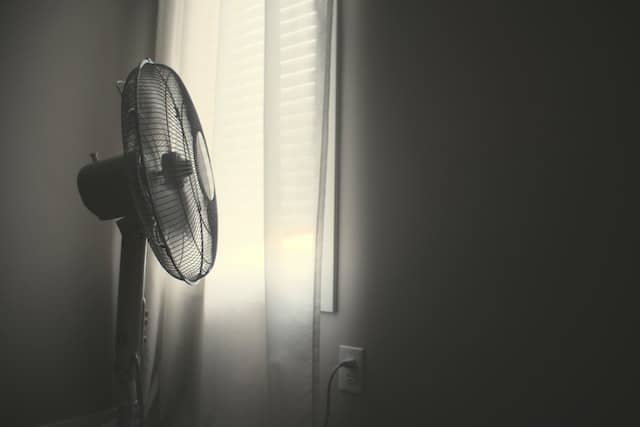
Photo by Andrew George on Unsplash
As a college student, you may ask yourself, how on earth can I survive the oppressive humidity and heat of summer without air conditioning. Well, don’t panic!
You don’t have to suffer through the sweltering summer heat in your dorm room because I can show you several low-hassle and low-cost ways that you can cool down your dorm!
It's undeniably hot during the summer, and it can be especially uncomfortable in a cramped dorm room when you are struggling to stay focused!
Luckily, there are some simple tricks you can use to cool down without relying on an air conditioner.
You can also keep your room cool by using some clever hacks around the house which mimic the effects of air con!
1. Use Natural Ventilation
To create a comfortable and refreshing indoor environment, you can rely on natural ventilation. This is a low-cost option because it doesn't cost you anything!
Open windows and doors, by doing this the flow of fresh air can be facilitated throughout the living space. This creates a cross breeze, which effectively purges the stale air and welcomes a refreshing influx of cool air.
The best way to maximize the cooling potential of natural ventilation, it is important to position the windows and doors in a manner that allows for optimal air flow. This strategic positioning can establish a pleasant and refreshing indoor environment without relying on energy-consuming air conditioning.
By making an eco-friendly choice to utilize natural ventilation, you can effectively cool down your room during warm weather without contributing to unnecessary energy consumption.
Embracing natural ventilation in your daily routine not only enhances the level of comfort in a room, but also promotes sustainability and conservation of energy. Therefore, it is highly recommended to prioritize natural ventilation as a simple yet effective means of cooling down a hot dorm room.
2. Keep Your Windows Closed
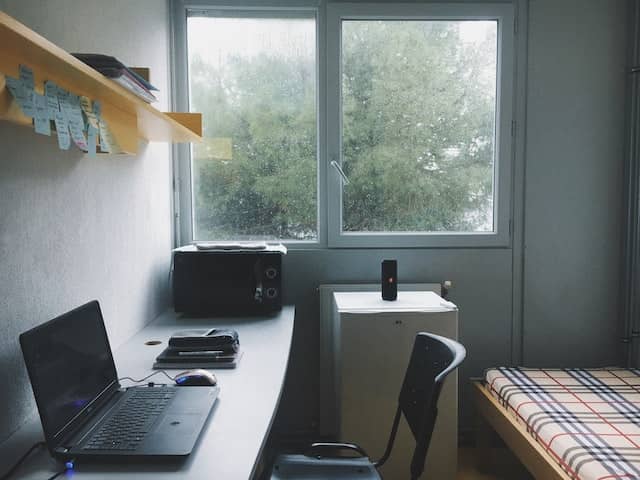
Photo by Nguyen Dang Hoang Nhu on Unsplash
Although it may appear counterintuitive, one of the effective ways to regulate room temperature is to keep windows shut during the daytime. Sunlight generates heat which warms the air outside, and if windows are open, the hot air enters your living space, raising the temperature.
However, by closing windows and drawing curtains during the day, you can block hot air from infiltrating your room and reduce the temperature.
As an alternative, you can open windows at night when the temperature is cooler to allow fresh air into your living space. Just remember to close the window before you go to sleep. Adopting this strategy can help regulate indoor temperatures without resorting to cooling systems.
3. Use ice cubes

Photo by Vidit Goswami on Unsplash
Believe it or not, a great way to combat this is by using ice cubes!
If you want to cool down a hot room without any major air conditioning equipment, simply put a few of your extra ice cubes into a bowl with salt and place it in the corner of the room.
As the ice melts, energy from the surrounding air is drawn into the bowl and converted into an evaporative cooling effect.
Even though it's not quite as efficient as regular AC units, it's still an incredibly effective way to get some relief from the summer heat!
Or try filling a bowl with ice cubes, then place it in front of a fan facing into your dorm room – as the fan blows across the ice cubes, this will help create a cooling effect.
4. Hang damp sheets or towels

Photo by Volha Flaxeco on Unsplash
This age-old trick goes back centuries, all the way back to Egyptian times and was used to counteract summer heat well before the heady days of air conditioning!
Hanging a wet sheet or towels on windows or balconies works by bringing cooler air inside while pushing warmer air out. So effectively it works a little like air con!
This Egyptian method doesn't necessarily lower a room's temperature drastically, but it can certainly make the heat more bearable!
Evaporation works because it takes energy to move water molecules from liquid form into gas, so when the molecules evaporate, they draw heat away from the surrounding area.
This is a great hack for small dorm rooms in need of a light breeze so you can hit those daily study goals!
So if you have access to any outdoor space, try hanging a damp sheet or towels on them so they can catch any breeze! This will act like a super cheap evaporation-cooling system!
5. Cover your windows during the day
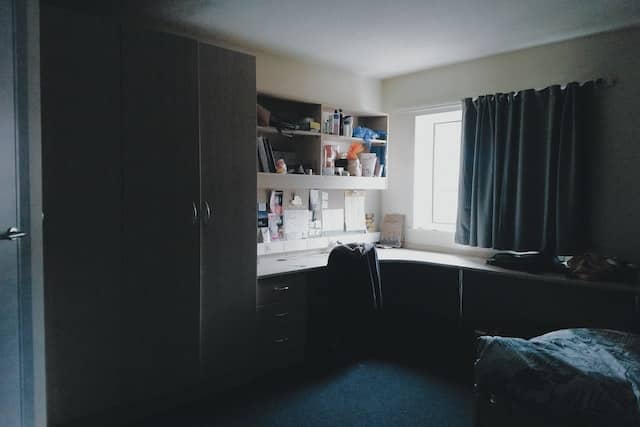
Photo by Aikea Guinea on Unsplash
One of the first things to do when the heat scales up is to keep your windows covered.
Covering your windows with thick curtains or thermal shades can be an effective way to keep the inside of a room cool during the hottest of days.
Having sun-blocking materials up on your windows is a great way to reduce the amount of heat that travels through direct sunlight and keep your living space cooler room. If possible, try to use light colors for your window treatments as this can help reflect much of the incoming sunlight away from entering the room.
Invest in blinds or curtains that will block out direct sunlight, as this will help regulate your room's temperature.
You can bag a bargain if you try looking on Amazon plus you can get them delivered straight to your door instead of having to get public transport, the expense of a cab or walk back from the mall carrying a blind!
Also don’t forget to open your windows at night when temperatures start to drop, allowing cooler air from outside to circulate inside your dorm room.
Make sure you close them again during the day so they don’t let too much heat in!
“One of the first things to do when the heat scales up is to keep your windows covered.”
6. Fans
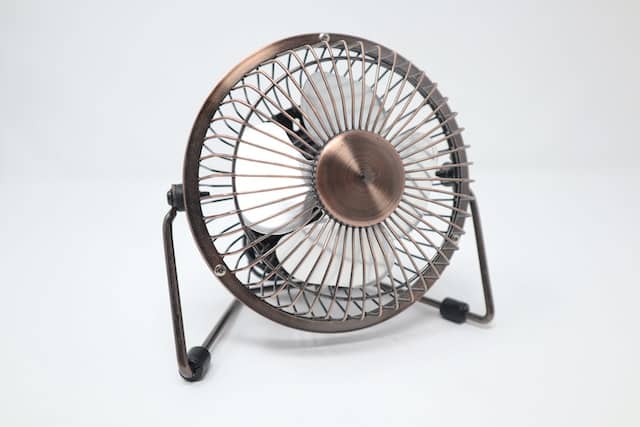
Photo by Call Me Fred on Unsplash
Keeping a dorm room cool and comfortable can be tricky in a mini-sized living space such as a dorm room!
Luckily, fans don't take up too much space yet still provide some much-needed relief from the searing summer heat.
Most fans are also energy-efficient and will only cost pennies per hour to use. As an added bonus, they're quiet enough not to disturb a roommate or classmate while they get work done!
Wall-mounted fans are a great option, as they come in all sizes and shapes and can be adjusted to allow for optimal airflow. However, if you want it for your dorm, I think the people who manage your college or university accommodations would have a problem with your making holes in their walls.
Besides, they should at the very least have an exhaust fan or ac unit installed in your dorm room.
Desk fans are perfect space savers too although it won’t have the power of a wall-mounted or floor-standing type in general.
For larger dorm rooms or roommate sets, standing floor fans a.k.a. tower fans, are also inexpensive and are directional or you can just have them swirling gently backwards and forwards so you don’t have the full strength of the fan on your face!
For extra cooling power, try pointing the fan towards an open window - the cool outdoor air will quickly be propelled into the room by the fan's force.
Whether it's keeping you focused on your studies at your desk or helping you get some well-earned rest, a fan can be a lifesaver when the temperature soars!
7. Have a Cold Shower or Bath

Photo by Skyler King on Unsplash
Cool water cools down your core temperature, so when you're feeling uncomfortably hot, a cold shower or bath can be a great solution to regulate your body temperature.
By narrowing your blood vessels, cold water can reduce your core temperature and prompt your body to release heat, resulting in a refreshing and cooling feeling.
In addition to its cooling effects, taking a cold shower or bath can offer other benefits. It can boost alertness, improve blood circulation, and increase energy levels, resulting in a more positive mood and overall well-being.
However, it's important to note that cold showers and baths may not be suitable for everyone. People with certain health conditions like hypertension or Raynaud's disease should consult their doctor before trying this cooling method to ensure it's safe and appropriate for their condition.
8. Cool Your Pulse Points
To combat the heat, you can cool down quickly by placing an ice pack or a wet, cool towel on your pulse points: the backs of your knees, the crooks of your elbows, your ankles, and wrists. Be cautious, though, and cover your skin with a towel to prevent it from becoming too cold.
This age-old method of cooling your pulse points can cause a swift drop in your body temperature, resulting in a sensation of coolness. Although most of the tips listed above are applicable during the nighttime because we tend to feel hot while sleeping, applying some of them before bedtime can provide relief.
It is crucial to keep in mind that while these techniques may have several benefits, they may not work for an extended period.
For example, while misting your sheets with water or utilizing the above technique doesn't cost much, their effects are only temporary.
My friend (Jacinta) also suggests using cold items found in your fridge or freezer, such as a bag of peas. By placing a bag of peas on one of your pulse points, you can help cool yourself down. So for those of you who don't want to take a shower or a bath, this might be the way to go.
This might help you avoid having to sleep in the basement!
9. Use common items found in your dorm room

Photo by Arun Sharma on Unsplash
Just like using items found in your fridge or freezer, try using common items that you already have in your dorm room. For example, a hair dryer.
Hair dryers can blow both hot and cooler temperatures, so why not turn on the cool air. With the cool air circulation cooling down you and your room, you can bask in the cool breeze.
The only drawback of this is that you may have to hold the hair dryer in your hands, unless you can position it against something that keeps it in place.
Also, the energy costs of your consumption will be on the rise, but one advantage of living in a dorm room means your energy bills are included in your accommodation fees and you can use as much as you want.
However, if you're living in independent student housing, then you need to think about your energy tariffs and try one of the other cost-effective ways of cooling down such as closing windows.
10. Use thin breathable cotton sheets, pillows and mattress

Photo by Vladislav Muslakov on Unsplash
With the advancement of mattress technology, people now have the option to experience a cool and refreshing sleep even on hot summer nights.
Among the different cooling options available, mattresses with moisture-wicking covers or breathable foam cores are widely preferred to provide a comfortable and temperature-controlled sleeping environment.
For those who desire an even higher level of comfort, there are cooling sheets and pillows that can further enhance the sleeping experience. These sheets can even be used to cover oneself while lounging on the couch to regulate body temperature.
However, for individuals who are on a tight budget and cannot afford the luxury of cooling mattresses, pillows, and sheets, using cotton sheets can also provide a cool sleeping experience. Cotton is a highly breathable material that can effectively maintain a comfortable and refreshing sleeping environment during hot nights.
Choose one of these options to have a good night's sleep during the hot summer months.
11. Stay hydrated

Photo by engin akyurt on Unsplash
Finally, don’t forget about staying hydrated too. Drinking lots of water throughout the day will help keep your body cool when the temperature dials up!
Trying to stay comfortable in a warm dorm room can be a challenge, and one way to make sure you’re managing the heat is by making sure you stay hydrated.
Keeping hydrated is so important for many bodily functions! including heart health and energy levels, so make sure you drink as much as you can when you are feeling the best in your dorm room.
Fill your water bottle and add as many ice cubes as you can!
Having a reusable water bottle right on your nightstand or desk is a great reminder to keep up with hydration.
Just remember to add as many ice cubes as you can! and if you get tired of plain old H2O, there are lots of other drinks available like fruit-infused waters or sparkling waters that are just as hydrating and taste so good too!
So while it might be tempting to grab all sorts of caffeinated beverages, don't forget to stay hydrated - taking care of yourself water-wise can go a long way in keeping cool during hot days in the dorms!
And, if you have space in the fridge, place a bowl of ice cubes near it – this will give the air circulating around the room an extra chill for those hot summer days!
12. Have fewer people around
Don't have a lot of people in your dorm room, the humidity alone is enough to raise the heat until your room feel boiling hot and you start to feel like you're suffering from heat stroke.
The heat rises from the humid air and the high temperature continues to rise until you get some of those people out of your uni/ college dorm room.
13. Use Reflective Surfaces

Photo by Suhyeon Choi on Unsplash
A fantastic method to maintain a cool atmosphere in your living space is by utilizing reflective surfaces. Reflective surfaces serve as a powerful tool to redirect and repel the sun's penetrating heat, thereby maintaining a desirable ambient temperature.
For example, you may opt to implement reflective window films or place strategically positioned mirrors around your room to effectively deflect the sun's rays.
These simple yet effective strategies can significantly reduce the amount of heat penetrating your room and consequently decrease your dependence on cooling systems.
When all else fails, I think your best bet is to just buy a personal fan. Fan's these days blow out COLD air as well as hot air.
14. Don't use anything hot in your dorm
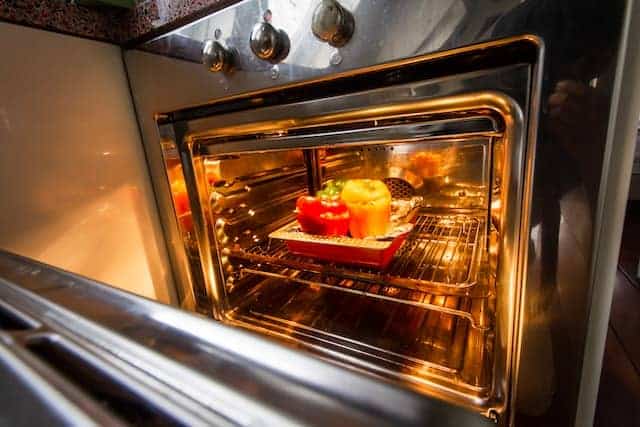
Photo by Louis Hansel on Unsplash
Using products that are hot or produce heat is never a good idea. For example, cooking with the windows closed or turning on the oven.
Since a lot of students normally keep their dorm room doors open in their residence halls, cool air normally escapes their room and if other students are cooking int he dorm kitchen or have the oven on, then a lot of heat can enter your room.
How To Cool A Dorm Room Without Air Conditioning - to end on

Photo by Joel Overbeck on Unsplash
So I hope that’s given you lots of simple tips and tricks to keep your dorm room nice and cool, even when it feels like there’s no escape from the heat!
For more student help and advice and for all those important things no one taught you in school, check back regularly to my weekly updated blogs to smash your college goals and level up!
Stay cool out there!

